
“[Giotto] became so good an imitator of nature that he banished completely that rude Greek manner and revived the modern and good art of painting, introducing the portraying well from nature of living people, which had not been used for more than two hundred years.”
(Vasari 1558, trans. De Vere 1912, p. 72)
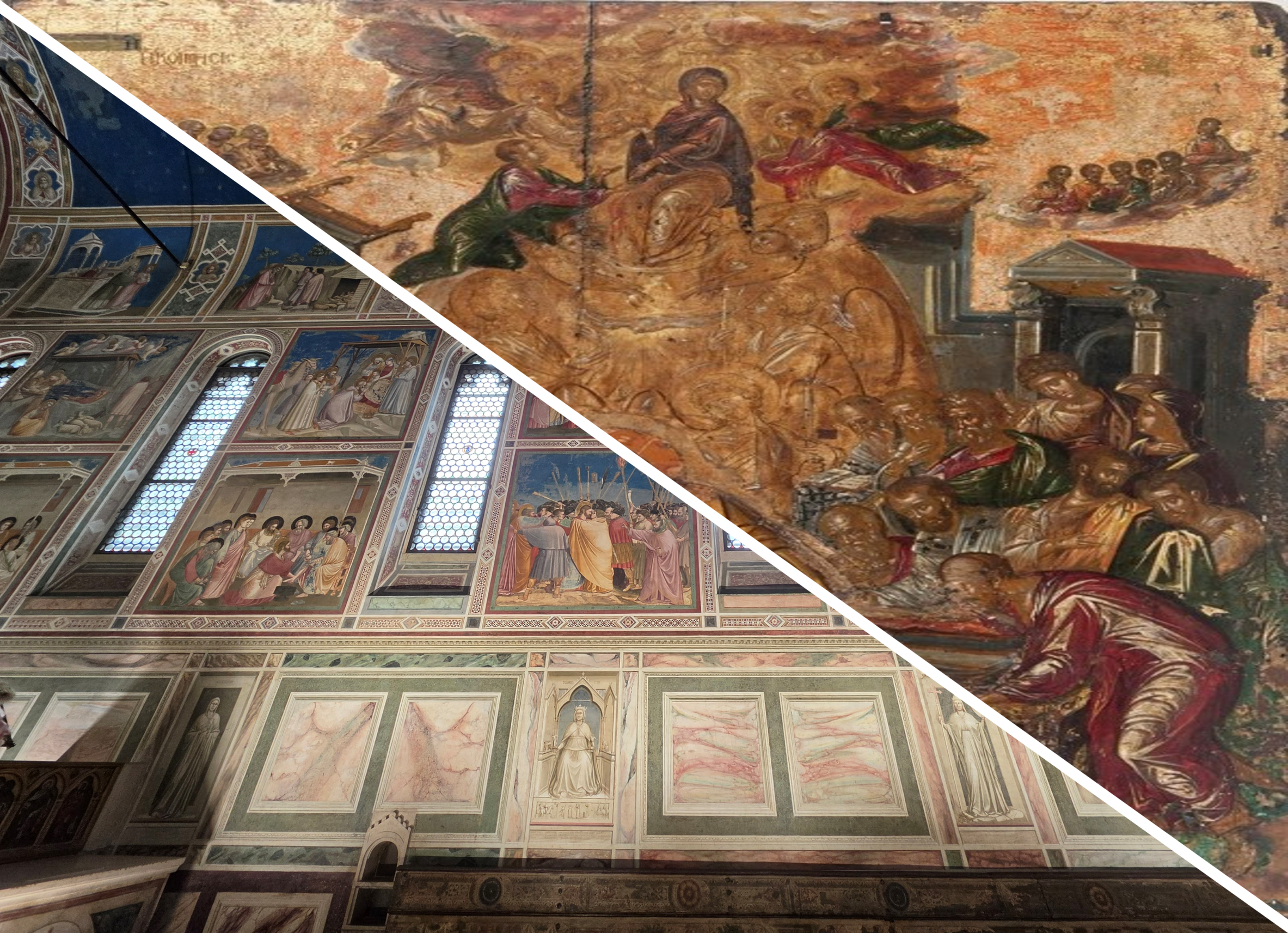
Giotto di Bondone (c.1267–1337) is often presented as a pivotal figure in the renewal of painting, associated with a move towards more convincing representations of the visible world and laying the ground for the Italian Renaissance. As I took part in my first online seminar discussion of the year, exploring themes around Byzantine icons, I was in Padua looking at Giotto’s frescoes, works that have become central to the story of Italian art and the transition from medieval to Renaissance art. The coincidence made me think about the relationship between what we see and the stories we tell about art, and what happens when developments become a measure against which other artistic traditions are judged.
Domenikos Theotokopoulos, known better as El Greco (1541–1614), began his career training in post-Byzantine icon painting in Venetian-ruled Crete, and it seems he had questions of his own about that hierarchy. A handwritten annotation in his own copy of Vasari’s Lives has been translated by Nicos Hadjinicolau to read:
“If [Vasari] really knew the nature of the Greek style of which he speaks, he would deal with it differently in what he says. He compares it with Giotto, but what Giotto did is simple in comparison, because the Greek style is full of ingenious difficulties.”
(Hadjinicolau, 2008)
This concept of “ingenious difficulties” formed a central discussion point in our seminar, and examining El Greco’s defence of the Greek tradition opens up a bigger question: one beyond determining which art is more accomplished and considering how we decide what artistic achievement looks like in the first place.
Beyond the Image
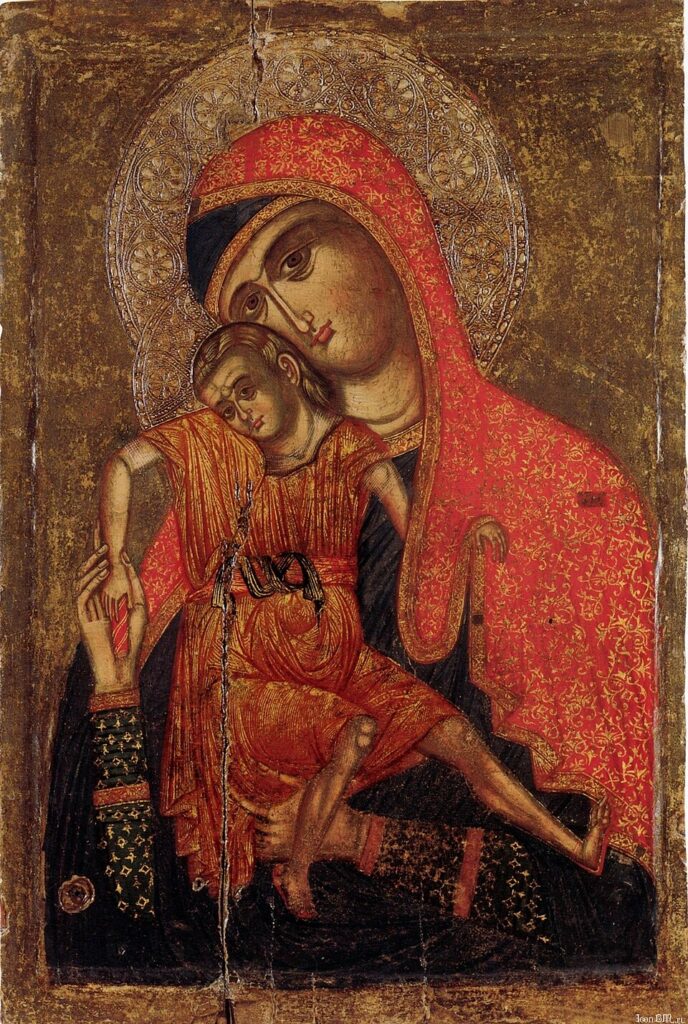
Byzantine icons are sacred images within the Eastern Orthodox tradition, most commonly associated with painted wooden panels, although they exist in a variety of media. Their significance lies not simply in their material form but in their relationship to the sacred person or event depicted. Icon painters worked within established visual conventions and prototypes, preserving recognisable imagery across generations while allowing for variation and adaptation. This continuity has sometimes contributed to the perception that Byzantine icons are formulaic: once you’ve seen one, you’ve seen them all. Yet this overlooks the complexity of a tradition in which visual conventions carried theological and devotional meaning. Icons are venerated, rather than worshipped as objects in themselves; the honour shown to an image is understood to pass to the sacred figure it represents. They provide a focus for personal devotion and a means of engaging with the sacred.
The Limits of Progress
Giotto’s frescoes are often presented as a revolution in Western art. His figures have a physical presence and weight, with bodies that reveal sculptural form beneath draped fabrics, in architectural settings with a convincing sense of space. His use of light and shadow together with his portrayal of multifaceted human reactions in the frescoes covering the walls of the Scrovegni Chapel, bring emotional intensity and an earthly dimension to the divine stories he is portraying. They’re stunning.
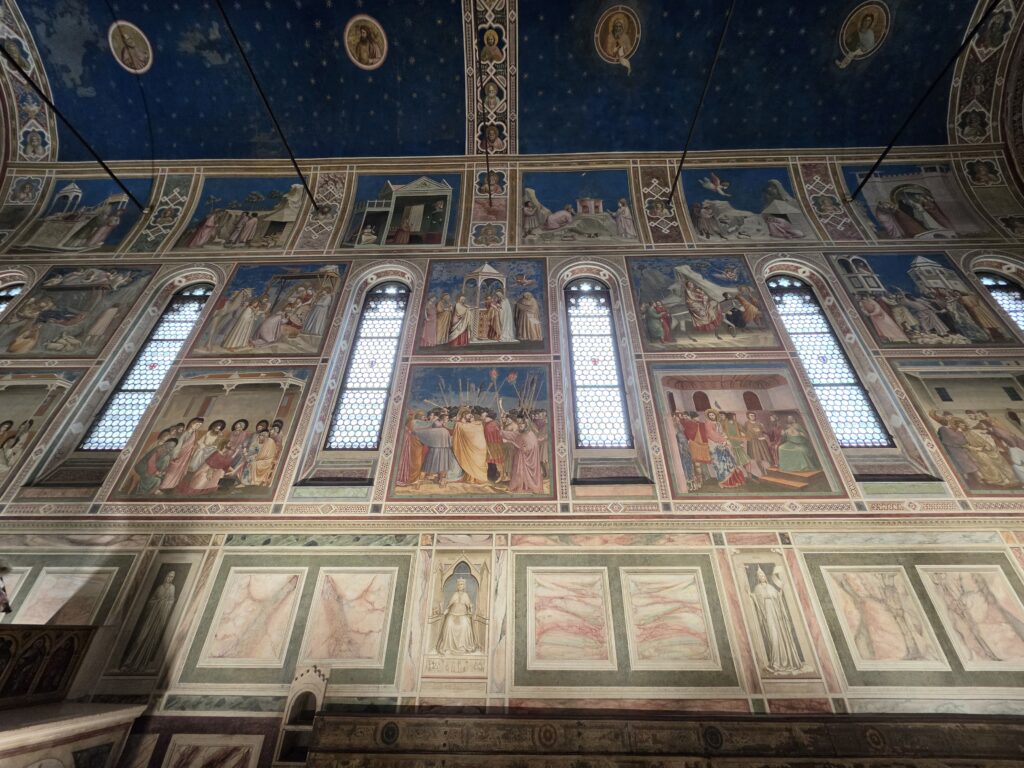
The contrast between Giotto’s work and Byzantine art exposes the assumptions behind a familiar narrative of artistic progress: that painting advances towards greater naturalism, spatial illusion and convincing representation. El Greco’s position though prompts us to think about what the Byzantine tradition achieves that Vasari’s framework struggles to recognise.
Vasari’s account is not quite as simple as Giotto inventing naturalism. His broader history of painting describes an earlier period of artistic excellence in antiquity, followed by decline and eventual revival. But his description of the Byzantine tradition as the “rude Greek manner” reveals the hierarchy through which he interprets that history: its conventions are judged against the naturalistic ideals he associates with artistic renewal. It’s not that Byzantine icons were created by artists incapable of naturalism, or without reference points for it; visual conventions served different purposes. Perhaps this is where the “ingenious difficulties” are revealed.
Giotto’s work didn’t mark the end of the Byzantine style, as El Greco’s training as an icon painter within the post-Byzantine Cretan tradition 250 years later testifies, and for El Greco, this early training was hugely significant. Byzantine icon painting was based on a different understanding of what religious art was supposed to achieve compared with the naturalistic traditions of Renaissance Italy. The use of flattened space prioritised symbolic and spiritual space over convincing, three-dimensional environments; unnaturalistic proportions that frequently included elongated or stylised features were chosen to communicate holiness over the physical realism; colours carried theological and spiritual significance over simply reproducing the appearance of the natural world. The objective wasn’t simply to depict a person or religious event but to communicate a sacred presence. These repeated characteristics formed a common language, and these ideas would remain important throughout El Greco’s life.
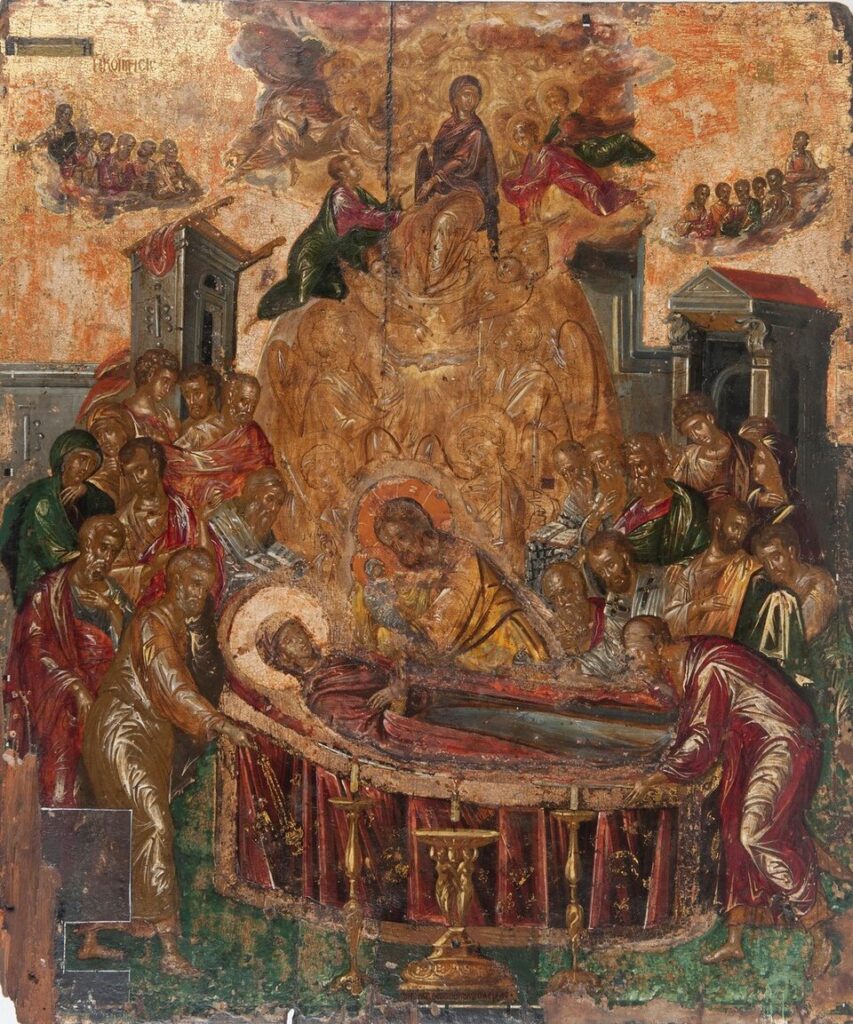
During his time in Venice, absorbed in the work of Titian, Tintoretto and Veronese, he developed a deeper understanding of colour, perspective and anatomy; in Rome he experienced the Mannerist movement and his compositions became more dramatic, his figures more anatomically elaborate, and his use of space more complex. But whilst he adopted Western techniques, he didn’t necessarily adopt the Western Renaissance ideal of naturalism.
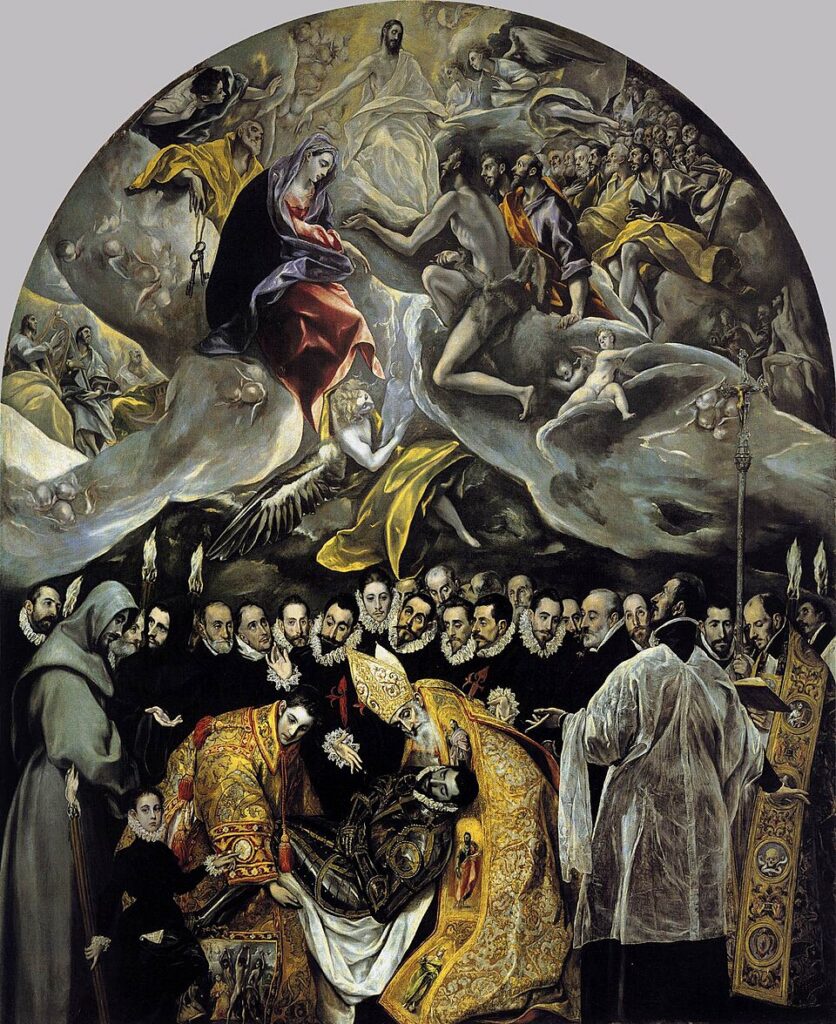
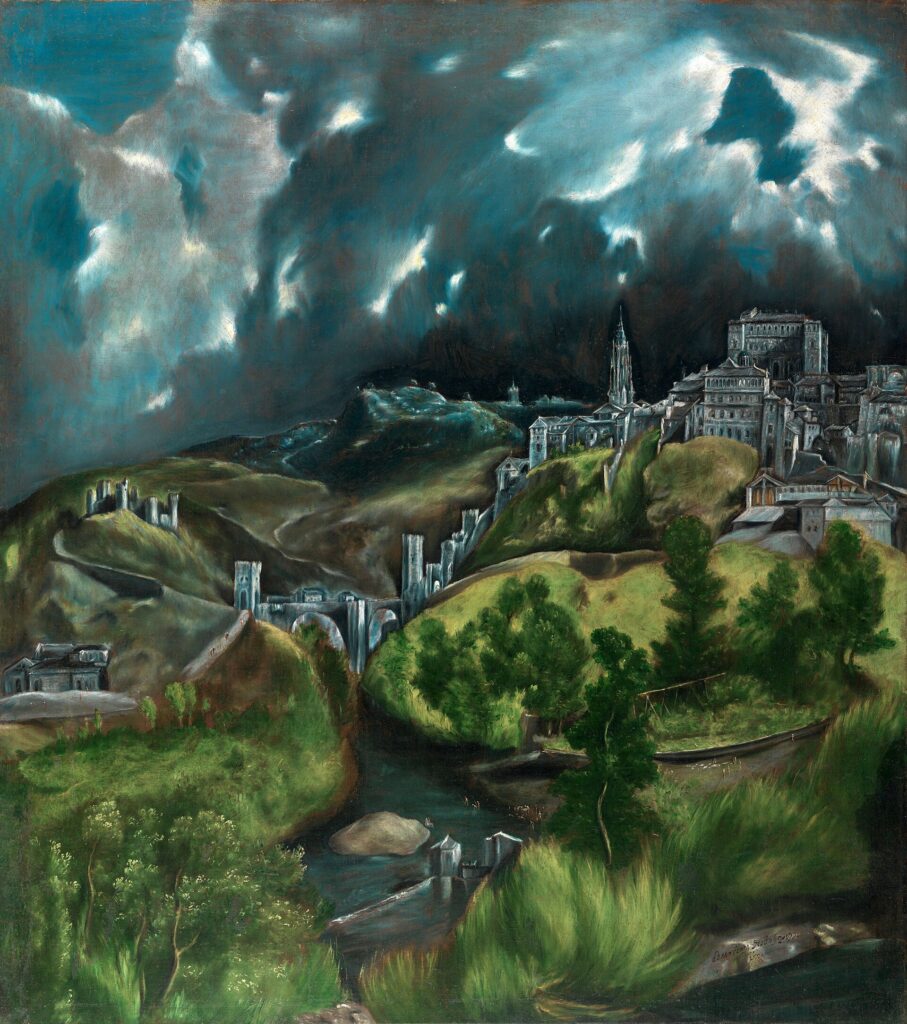
His work is painted using the materials and techniques of an Italian Renaissance artist, but he is not necessarily thinking about painting in the same way. In The Burial of the Count of Orgaz (1586–1588) (Figure 3), the composition is divided between the earthly burial below and the heavenly realm above. Although El Greco employs familiar Renaissance techniques of composition and construction of figures, the two realms operate according to different visual principles; the heavenly figures are rendered in a way that prompts viewers to recall the spiritual priorities of Byzantine icon painting, with elongated, ethereal features. His landscape painting reveals a similar disinterest in straightforward naturalistic representation as demonstrated in View of Toledo (c. 1599–1600) (Figure 4))where a dramatic sky, distorted landscape and expressive lighting create an almost supernatural atmosphere that isn’t simply a faithful representation of a geographical location; it’s an emotional and spiritual experience.
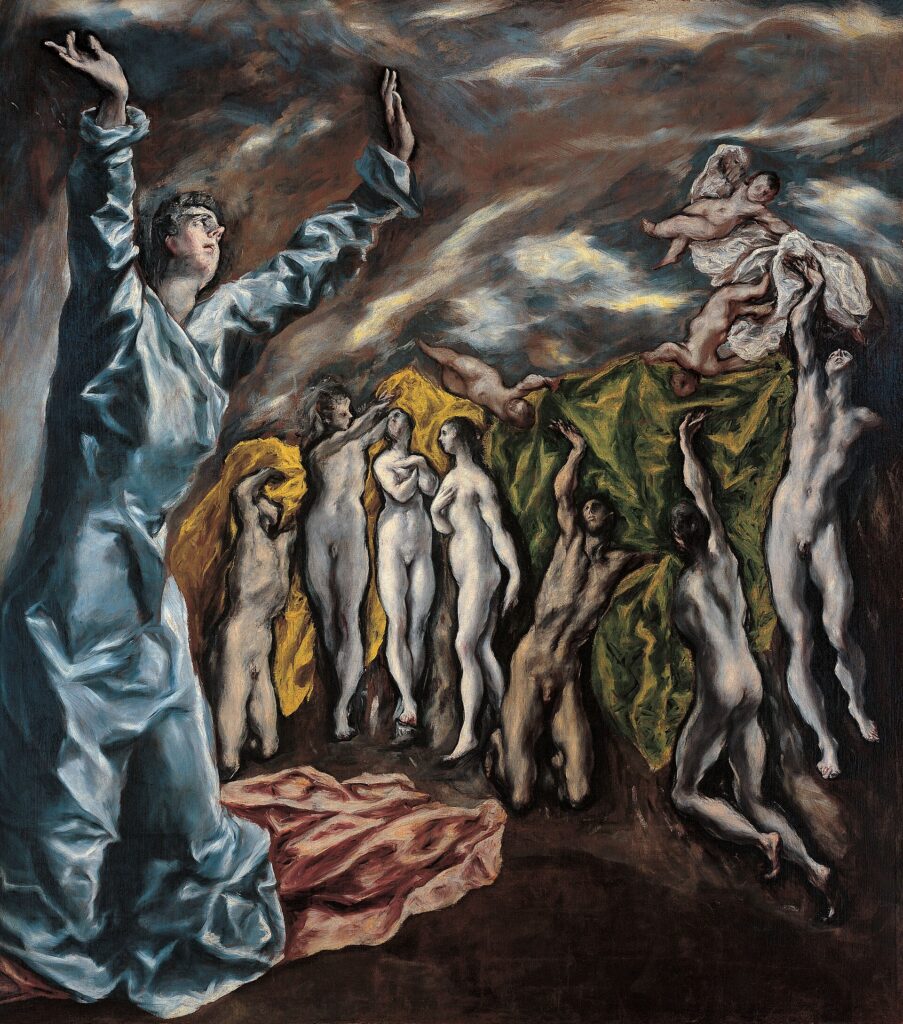
El Greco’s later works in Spain are particularly striking. The Opening of the Fifth Seal (c. 1608–1614) (Figure 5) presents figures that are extraordinarily elongated, the space is ambiguous, and the colours are intensely expressive. Although its visual language is very different from the Byzantine icons of his youth, there are echoes of the visual priorities of his early training, where the spiritual world seems to take precedence over the physical one. El Greco never completely abandoned his Byzantine roots. His early training remained part of his visual vocabulary even as his style became increasingly influenced by the techniques and conventions of the Renaissance and Mannerist painting. He didn’t simply move from being a Byzantine painter to becoming a Western European painter; he employed those ‘ingenious difficulties’ and gradually transformed the two traditions into something entirely his own.
Learning to Look Differently
Perhaps we are now more open to different definitions of artistic achievement, less inclined to assume that a more realistic representation is necessarily a more advanced one, yet the idea of artistic progress still lingers.
Giotto’s work transformed the possibilities of painting, demonstrating how light, space, gesture and expression could give familiar religious narratives a new sense of physical and emotional presence. But El Greco’s defence of the Byzantine tradition reminds us that this is not the only way to understand artistic achievement. What might appear primitive when judged against the conventions of Renaissance painting may reveal considerable complexity when considered in its own context.
The more we understand about the world in which art is created, the more we can see. Whether we are looking at a seemingly simple arrangement of flat shapes or an ornate religious panel, comparison can be illuminating, but it is not always a reliable measure of artistic value. The challenge is to look beyond the familiar measures of artistic achievement and understand what else might be going on.
Selected Bibliography
https://www.open.edu/openlearn/history-the-arts/the-byzantine-icon/content-section-overview?active-tab=description-tab (Accessed 06 November 2026)
https://medieval.ox.ac.uk/byzantium-and-italian-renaissance-art/ (Accessed 06 November 2026)
Hadjinicolau, N. (2008) ‘La defensa del arte Bizantino por El Greco: notas sobre una paradoja’, Archivo Español de’’ Arte, vol. LXXXI, no. 323, pp. 217–32, July–September. A detailed summary in English of this article is available at http://www.sciencedaily.com/releases/2008/12/081218132252.htm (Accessed 06 November 2026)
Vasari, (trans. G. du C. De Vere) 1912 [1558]. Lives of the Most Eminent Painters Sculptors and Architects, volume V: Andrea da Fiesole to Lorenzo Lotto (trans. G. du C. De Vere), pp. 72-95. https://www.gutenberg.org/cache/epub/25326/pg25326-images.html#Page_72 (Accessed 06 November 2026)