
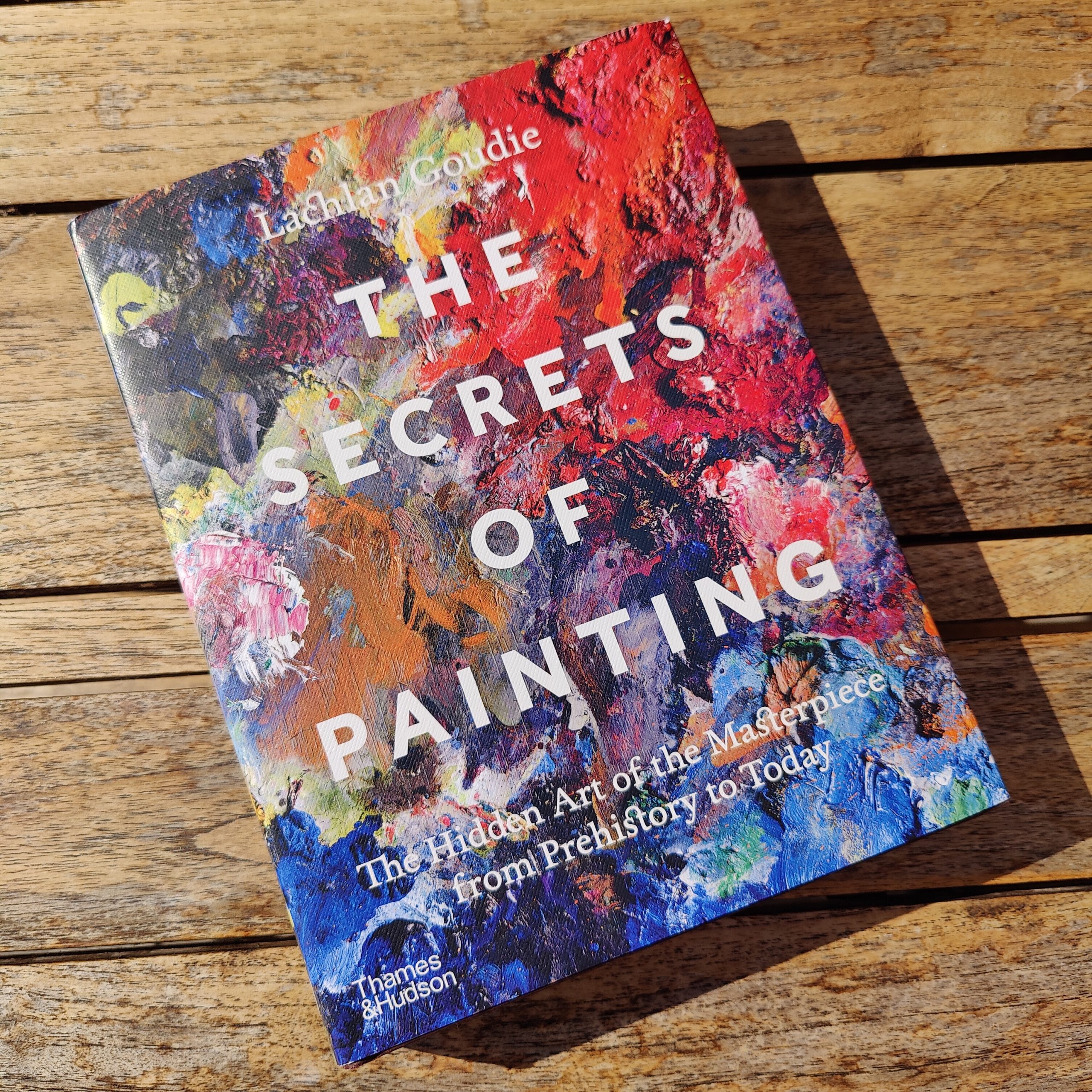
Lachlan Goudie’s The Secrets of Painting offers a fascinating new way of exploring the history of art. Rather than following a traditional chronological survey of artists or movements, Goudie traces the story of painting through the technical innovations that changed what artists could achieve. From prehistoric cave paintings and Egyptian encaustic portraits to fresco, oil paint, watercolour and even AI, each chapter focuses on a breakthrough that altered the course of painting.
What makes the book particularly engaging is Goudie himself. As a practising artist, he doesn’t simply explain these techniques; he tries them. Often taking guidance from specialists, he recreates historical processes to understand not just how they worked, but why they mattered. Those moments of experimentation bring the book to life, turning what could have been a technical history into something far more tactile and human and a blend of storytelling, history and science.
My favourite thing about reading The Secrets of Painting is its breadth. There were artistic traditions I’d never encountered before, alongside artists I already adore (shout out to Anselm Kiefer), but even artists I thought I knew well felt new when viewed through the lens of technique rather than biography or style. Goudie made me look again; not just at the finished painting, but at the choices, materials and discoveries that made it possible.
One of the book’s strengths is that it never falls into the trap of suggesting that newer automatically means better, or that traditional methods are somehow purer. Instead, Goudie shows that art is a continuous conversation, with each generation building on what came before. His inclusion of AI at the end of the book feels surprisingly natural in that context. Whether readers ultimately embrace or reject AI as an artistic medium, Goudie’s perspective encourages curiosity rather than fear.
I finished The Secrets of Painting with a deeper appreciation of the ingenuity behind every painting and a much broader understanding of art history. Goudie’s format feels genuinely original, and it made me think about painting in ways I hadn’t before. It is as much about looking closely as it is about painting itself, reminding that every brushstroke sits on centuries of experimentation. An excellent book for artists, art lovers and anyone curious about how painting has continually reinvented itself.